Every modern company is built on a “tech stack,” the collection of software and tools that employees use to do their work. Smart leaders make it a priority to hire and retain teams of skilled employees to build and service their tech stacks.
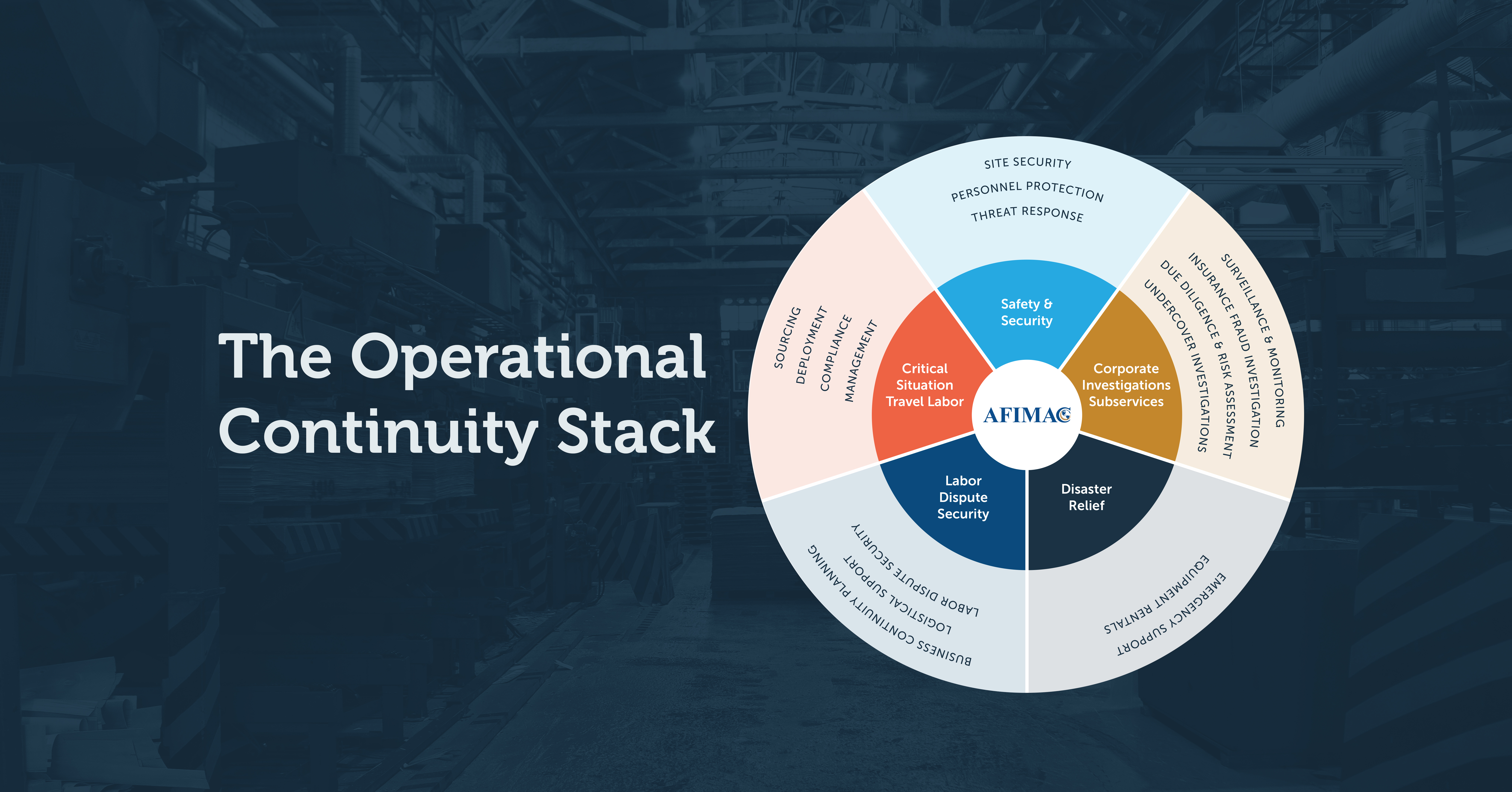
The idea of an “operational continuity stack” may not be as familiar, but for many businesses, it is just as essential to maintaining smooth operations. Rather than tech tools, the operational continuity stack is built on collaborative teams of people with specialized capabilities that connect critical situation travel labor (CSTL) and protective services. While each team serves its own important purpose, the real power of the stack comes from the ways that the interconnected teams collaborate and coordinate to simplify logistics and minimize disruptions.
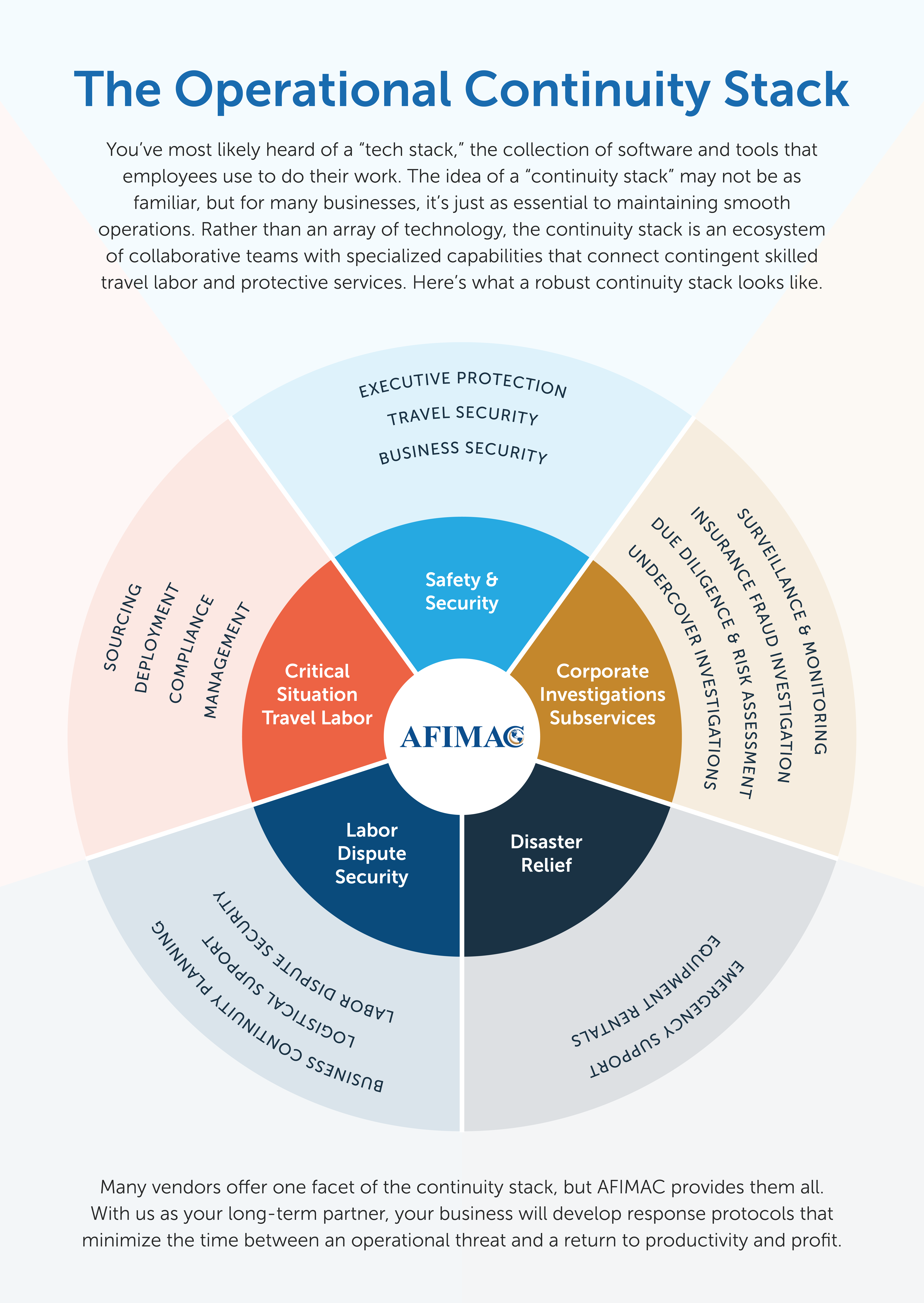
Here’s what a complete operational continuity stack looks like:
-
- Corporate Investigations: By proactively leading due diligence, risk assessment, surveillance, and monitoring, this team spots issues before they become problems. And when needed, they also handle insurance fraud investigations and undercover investigations.
-
- Critical Situation Travel Labor: When the local labor market can’t supply enough skilled workers for you to rapidly scale, an effective CSTL team quickly finds and seamlessly supervises your new employees, handling everything from sourcing to deployment, compliance, and management.
-
- Safety and Security: If operational challenges escalate into security issues, this team manages site security, personnel protection, and threat response.
-
- Disaster Relief: No matter how prepared you are, natural disasters sometimes threaten your operational continuity. With timely emergency support and on-demand rental of the equipment you need, you can minimize downtime.
Many vendors offer one piece of the operational continuity stack, but as with a tech stack, when one part of the system breaks down, it puts pressure on every other area. Without strategic management and security, for example, the most qualified and motivated manufacturing workforce can’t overcome an order backlog.
In the same situation, a complete operational continuity stack provides a connected system purpose-built to minimize recovery time. With safety and security supporting workforce and operations, staff can be mobilized quickly, which in turn facilitates backlog recovery and a return to on-time delivery.
Speaking of time, the time to build your operational continuity stack is now—before you’re faced with a crisis. A thoughtfully constructed continuity stack creates long-term relationships that include regular connections with all partners. This ongoing collaboration helps you develop response protocols so that, when your operational continuity is threatened, you’ll be prepared to act quickly.
If you’re looking for a partner to help you connect workforce stability and protective services so you won’t have to manage two separate timelines during an operational interruption, AFIMAC has decades of experience in a variety of industries. From assessment and consultation to mobilization, rapid deployment, and hassle-free demobilization, we stand ready to provide you with a complete operational continuity stack.