Where manufacturing in the U.S. was once considered difficult, largely because of comparatively high labor costs and complex regulation, a shifting technological and global economic reality has sharpened its appeal. U.S.-based manufacturers are nearshoring and reshoring operations after decades of migration away from domestic production.
In AFIMAC’s latest position paper, we explore why this is happening and offer our insights on what’s next for manufacturers navigating these transformational times.
Download the paper now or read on for a preview of what you’ll learn.
What’s Happening: The Rise of Nearshoring and Reshoring
Offshoring operations to Asia once promised low-cost efficiency, but the pandemic, rising costs, tariffs, and increasing global instability have diminished the allure of offshoring.. Today, more manufacturers are nearshoring—bringing operations to nearby countries like Mexico—or reshoring by returning work to U.S. soil. This strategic shift is helping companies cut supply chain risks and better align production with market demands. In this new era of manufacturing strategy, proximity, control, and resilience outweigh cost savings alone.
Nearshoring and Reshoring by the Numbers
According to Kearney’s 2026 Reshoring Index, which reviews imports of goods from 14 Asian countries and regions, the overall manufacturing import ratio has increased for a second year in a row. It now sits at 14.15%. Nearshoring has followed the same upward trend, with Mexico surpassing mainland China as the largest exporter to the U.S.
Bain & Company found similar trends in a recent survey of CEOs and COOs of large companies. The survey found substantial intent and momentum toward reshoring and nearshoring. Among the findings: 81% of respondents cited plans to move supply chain operations closer to market, an 18% increase from the previous survey. A substantial number of companies are beyond the planning stages and actively investing in supply chain relocation. However, according to the report, only 2% of respondents have fully completed their plans to move their supply chains, which suggests that this is a long-term rather than short-term change in progress.
What’s Behind the Supply Chain Shift?
Over the last decade, several forces have affected the supply chain shift:
- Rising Offshore Labor Costs
- Political Instability
- Advancements in Automation
- National Security and Resilience
In 2026, ongoing global trade and military conflicts add another compelling reason for companies to nearshore and reshore. All of these factors combined make a strong case for reshoring—not just as a cost strategy, but as a long-term business continuity plan. This increase in domestic manufacturing also increases the demand for workforce flexibility.
How to Bridge the American Labor Gap
Bringing production to the U.S. is far from a perfect solution. Persistent labor shortages present a major challenge. A recent Deloitte study estimated that there is a 1.9 million-worker gap in U.S. manufacturing, and that number is expected to double by 2035. Solving the labor issue requires a multi-pronged approach, which includes:
- Rebuilding and retraining the workforce;
- Automating where possible; and
- Adopting dynamic staffing models.
Looking Beyond 2026
The momentum behind reshoring is strong, but not without headwinds. New U.S. tariffs and ongoing tensions—even with traditional allies such as Mexico and Canada—have introduced some uncertainty. Political friction, cuts to incentive programs, and fear of a looming recession could create short-term disruption.
However, major shifts like nearshoring and reshoring don’t reverse overnight. Most manufacturers already transplanting their operations are unlikely to abandon their plans. In fact, increased tariffs could actually make U.S. goods more competitive, accelerating domestic production. Overall, the movement is towards establishing more localized, resilient supply chains.
How AFIMAC Helps Manufacturers Navigate these Shifts
Nearshoring is not just a manufacturing issue—it’s a workforce readiness and risk management challenge. Companies need partners to help them navigate uncertainty and maintain operational continuity as they scale or shift production.
At AFIMAC, we specialize in helping manufacturers bridge these gaps—with temporary skilled travel labor, workforce continuity planning, and executive protection that ensures operations stay on track, even during disruption.
Contact: info@afimacglobal.com | 1-800-554-4622 or Explore our services at AFIMACGlobal.com
Want to Read the Full Report?
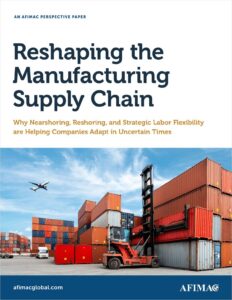
Reshaping the Manufacturing Supply Chain offers a deep dive into the evolving landscape of global manufacturing strategy. This paper explores the full spectrum of reshoring and nearshoring trends, from the historical forces that sparked change to the technologies making local production more viable.
It highlights key data from industry leaders, examines the labor challenges facing U.S. manufacturers, and outlines actionable strategies for building resilient, cost-effective supply chains in today’s rapidly changing world. Whether your company is planning a relocation or reevaluating your global footprint, this paper is required reading.